Everything you need to know about upholstery fabric
Date Posted:22 April 2026
Upholstery is more than just covering a chair. It involves a coming together of all these considerations: your fabric's weight, your lifestyle, your upholsterer's strengths and sometimes, when to just slip cover the furniture item instead.
Ask the right questions before you buy
Where is the piece going to live, and how hard will it work? What is the best fabric for sofas? A sofa in front of the television — sat on for three hours every night — needs a heavy duty upholstery fabric as opposed to a formal sitting room chair that gets politely used twice a week. Wet swimmers coming in from the pool? You want an indoor-outdoor performance fabric. Polite guests who take their shoes off? You have far more latitude.
The other critical question: do you have animals? If you're upholstering a sofa and you have a cattle dog, Chrissie's advice is very clear: have throws made in the same fabric as the sofa. Get two done: one on, one off. You can wash them separately, keep things fresh, and the sofa itself will last far longer. It's healthier for the animal, and smarter for you.
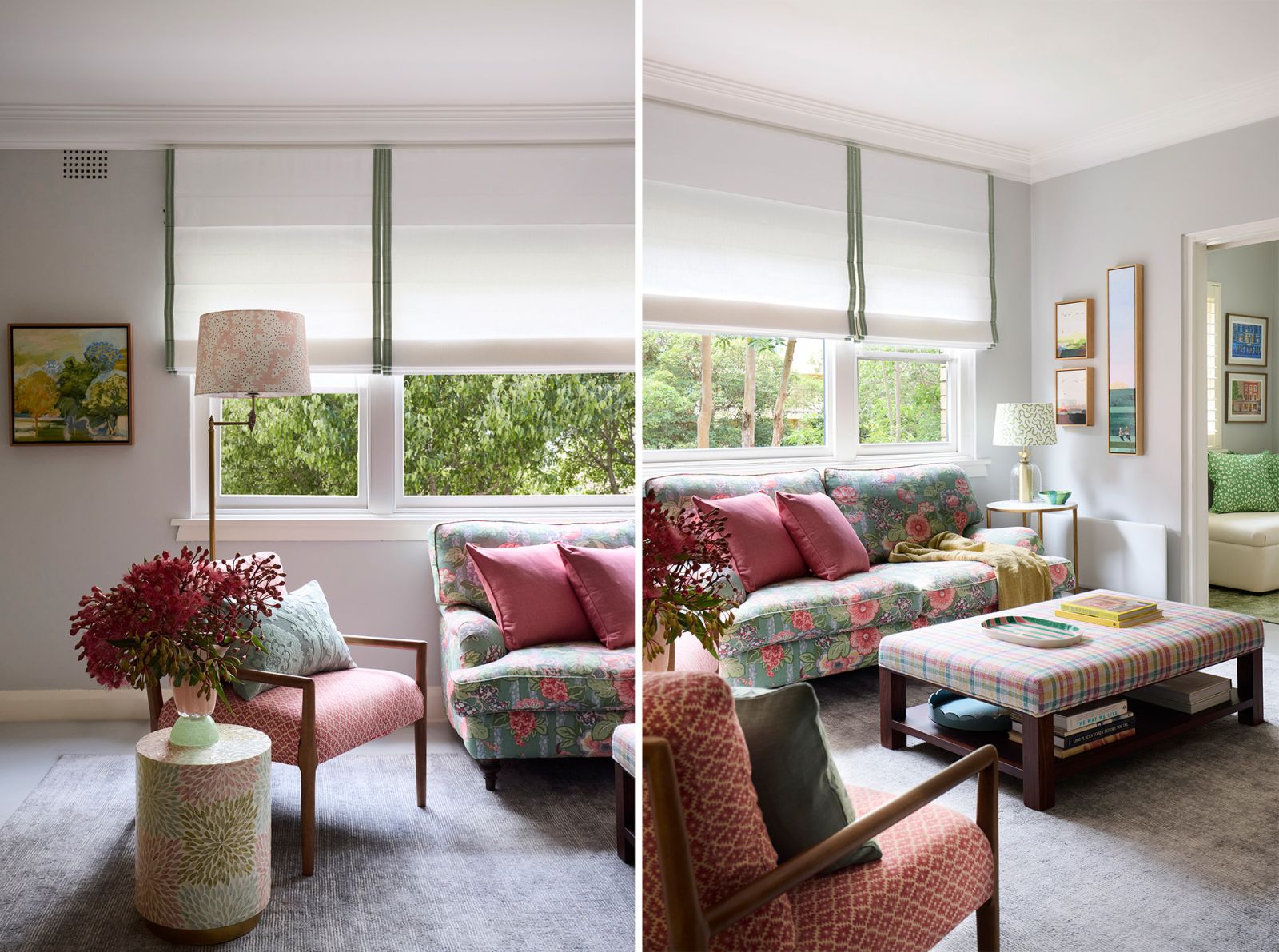
Understanding the Martindale rub count
The Martindale test measures fabric durability by rubbing it repeatedly until the yarn breaks. It tells you roughly how much wear a fabric can withstand — but it doesn't tell you how fabric will behave under UV light, with cleaning chemicals, or with pets. It's one useful data point, not the whole picture.
Heavyweights, naturals, and everything in between
Heavy-duty fabrics are often blended synthetics are designed for high-traffic commercial use. They can be steam-cleaned, and they last a very long time, which is actually part of the problem: they're petrochemical fabrics that won't break down. They can also look a little commercial if you're not careful, and with so much boucle appearing in cheap online furniture, there's a risk that your beautifully considered interior ends up looking like it came from a fast-furniture retailer.
Says Chrissie:
"I would rather have something that wears out — cottons, linens, natural fibres — things that break down, that are easy to recycle. They are fabrics that have a life and then a sensible end."
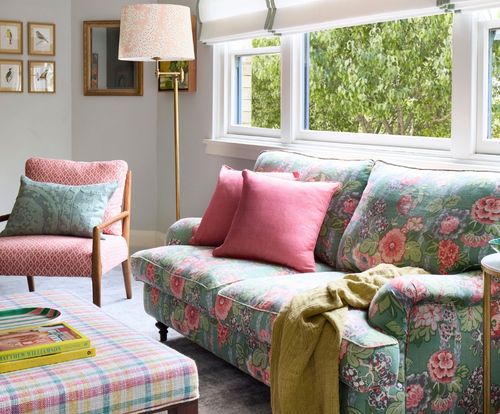
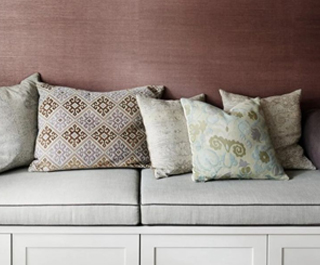
Natural fabrics: heavy linen, printed cotton, Indian woven cottons sit roughly in the 15,000–20,000 rub range for domestic use. The key thing to know is that plain, light linen is essentially impossible to spot-clean once upholstered. If you're set on linen, slip cover it. Or choose dark colours and accept that they're difficult to clean.
At the lighter end — silks, fine Indian cottons, delicate weaves; these are best for covering bed heads, occasional chairs, and pieces that polite people sit on occasionally. These can be lined or backed to give them more body, and a skilled upholsterer will advise you honestly about what's achievable.
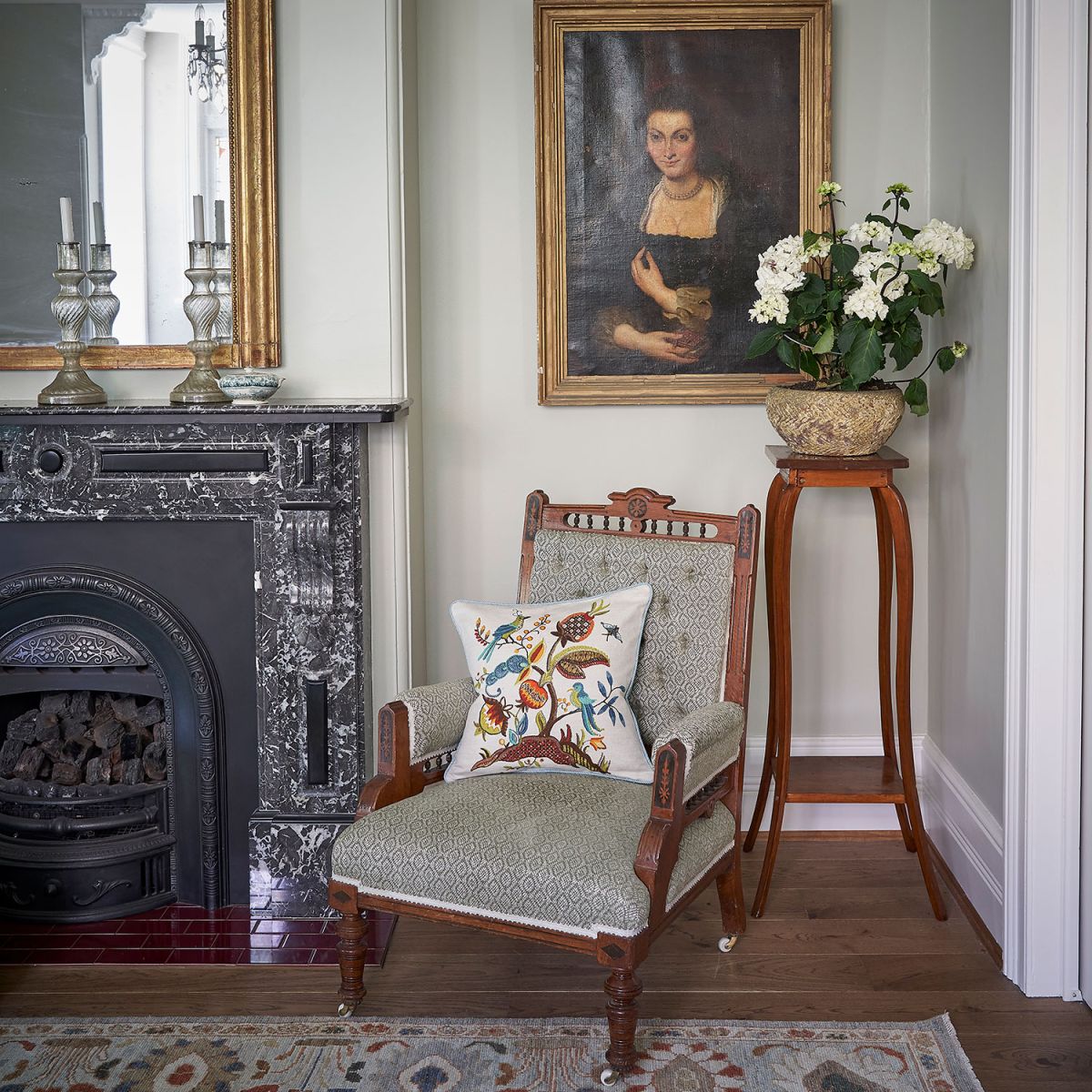
Fixed upholstery vs slip covers
Fixed upholstery means fabric attached permanently to the frame, with only cushion covers zippering off for cleaning. Slipcovers are a removable layer over the top — covering everything, including the underlying upholstery, so the whole thing can be taken off, laundered, and put back on.
A well-made slipcover can look just as tailored and elegant as fixed upholstery — the tradition comes from grand English country houses, where furniture was too precious to send away for reupholstering. Slip covering let it be refreshed without ever leaving the room. That "slightly soft, linen-draped" Californian aesthetic so popular in recent years? That's slipcover culture.”
Slip covering can cost more than reupholstering — but it gives you washability, the ability to change the look entirely, and a practical solution for using fabrics (white linen, fine cotton) that would otherwise be impractical for fixed upholstery.
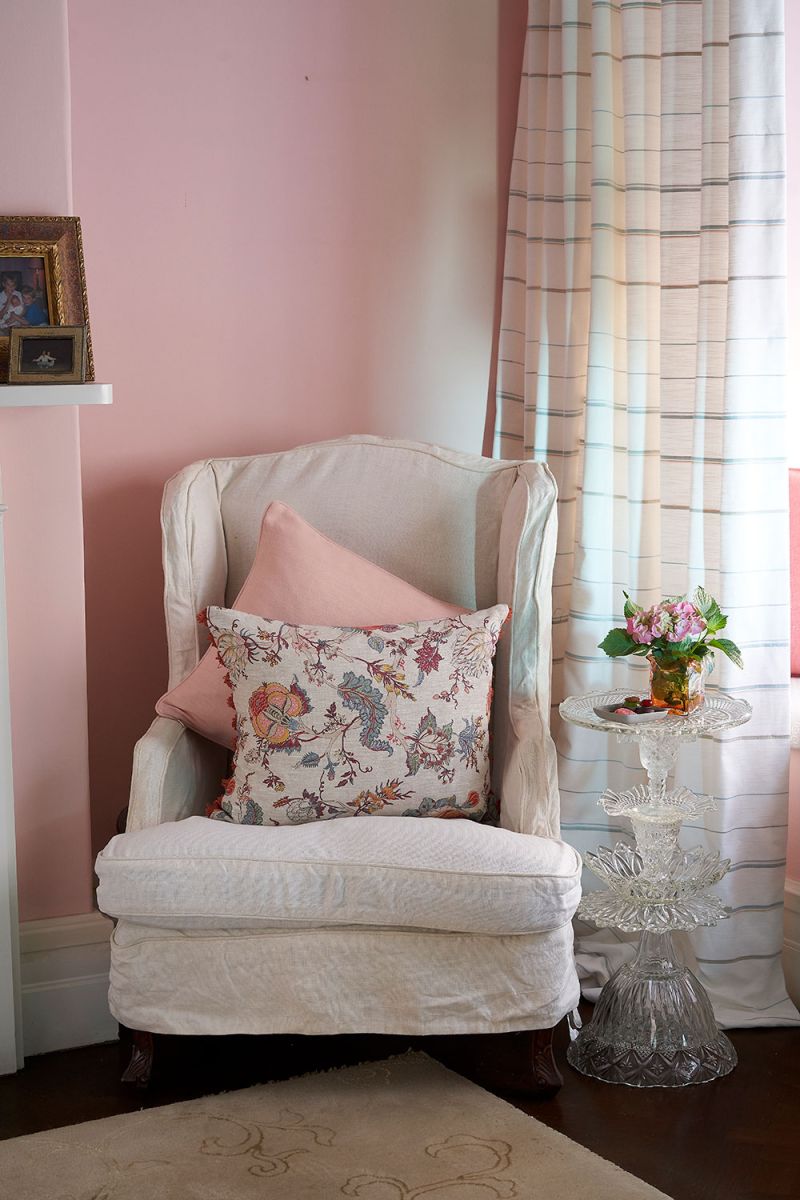
CHRISSIE'S RULES
Practical wisdom from the store:
Your upholsterer is a tradesperson, not a designer.
A great upholsterer will tell you whether a fabric is suitable and how many metres you need. They won't tell you whether five pieces in the same room should all match— and some might quietly prefer that they do, simply because it makes their job easier. For guidance on what goes together and how patterns work across a space, talk to a designer or the shop you're buying the fabric from.
Scale your pattern to your furniture
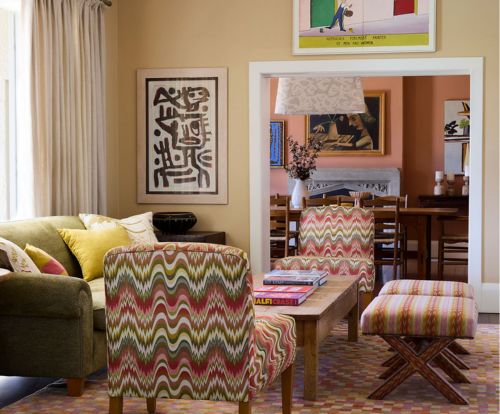
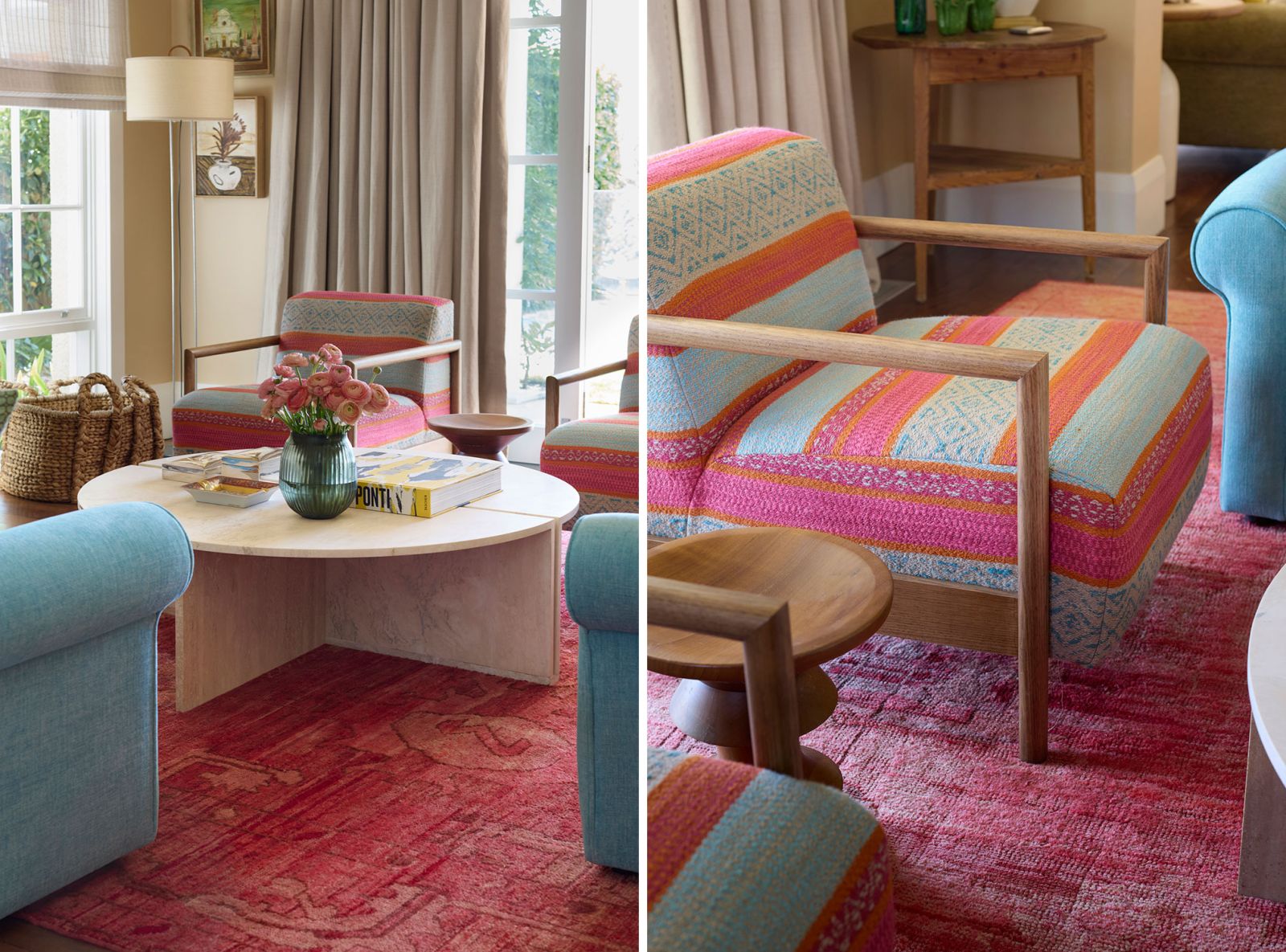
Large patterns belong on large sofas; small patterns suit smaller chairs. Big stripes work beautifully on a generous sofa, while finer stripes are better scaled to occasional chairs. There are always rule-breakers : that's part of the pleasure, but this is the reliable starting point when you're unsure.
Rotating and shaking your cushions is not being fussy — it's why things last.
Turn seat cushions regularly. Shake them. Get the dust out. Textiles are meant to be shaken, just like clothing, and this is one of the main reasons well-cared-for pieces outlast neglected ones by a decade or more. It takes thirty seconds and makes a real difference.
Never scotch guard fabric you'll be sitting on.
Scotch guard is a forever chemical — a polymer suspended in a spray and a harmful product to put in the same space as pets and children. It also loosens dye over time. Skip the spray entirely. Deal with spills directly. A fabric worth choosing is worth looking after properly.
Fire retardant treatments wash out. Fire retardant finishes are removed by both laundering and dry cleaning, so factor that in if you're specifying for any situation where fire resistance matters. It's not a permanent solution, and assuming it can create a false sense of security.
Curved furniture needs fabric with stretch.
The round and curved sofas that are so fashionable right now require fabrics with genuine flexibility. Without it, even a skilled upholsterer will struggle, and over time the covering will sag away from the frame. This is a large part of why boucle and textured, nobly weaves are dominating the current moment — they have the give that curved forms demand.
Dining chair seats live under the table.
People often fall in love with a beautiful fabric for dining chairs and only realise, once everyone is seated, that you'll never actually see it. Save your best fabric for backs, arms, and showpieces. The seat just needs to be practical and cleanable — save the drama for somewhere it can be appreciated.
Reupholstery is also redesign.
When a piece is being recovered, it's the ideal moment to reconsider the whole thing. Remove a skirt and expose the legs. Take out the buttoning. Tighten the profile. Slim down the arms. A thoughtful upholsterer can substantially change a piece's character — making something old-fashioned feel streamlined and modern — without touching the frame itself. Always have that conversation before the work begins.
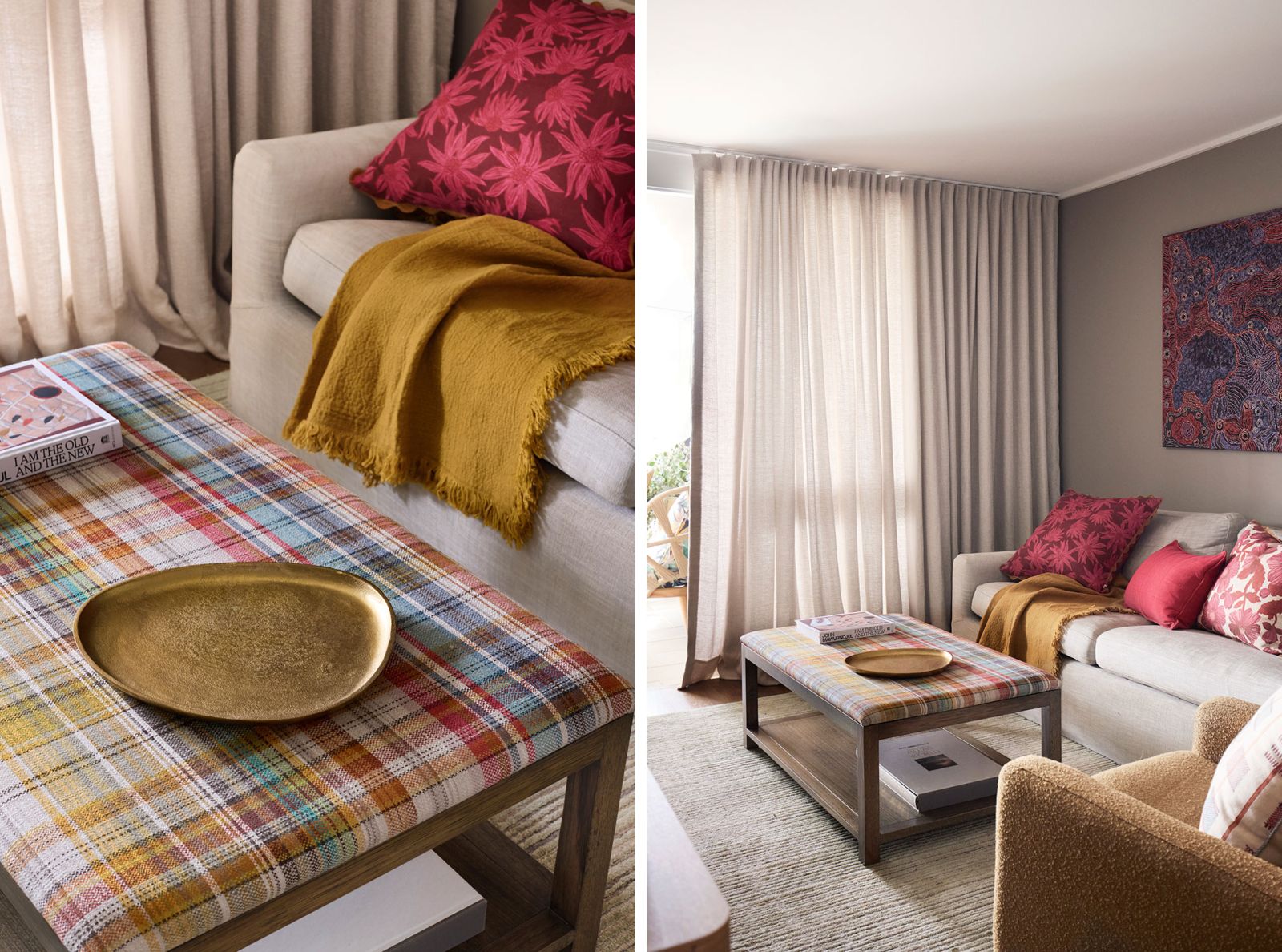
WHAT NO CHINTZ STOCKS
The range
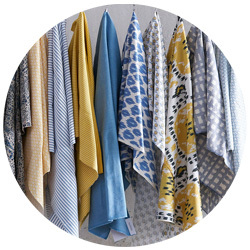
No Chintz carries upholstery fabrics by the metre — our own designs plus a large selection from international houses including Colefax and Fowler, Manuel Canovas, Osborne and Little, Thibaut, Rubelli, Pierre Frey, Jim Thompson, and many others. The collection spans performance fabrics suitable for outdoor and indoor use, heavy-duty commercial grade fabrics, mid-century specific ranges (the Pavilion Stripe, Picnic, Riviera, and Square Dance collections have been particularly popular), and fine decorator fabrics for occasional and decorative pieces.
Frequently Asked Questions
What is the best fabric for a sofa?
It depends on how hard the sofa will work. A sofa used for several hours every night needs a heavy duty upholstery fabric, while a formal sitting room chair used occasionally gives you far more latitude. If you have pets, Chrissie's advice is to have throws made in the same fabric as the sofa — one on, one off — so you can wash them separately and extend the life of the upholstery considerably.
What does the Martindale rub count mean for upholstery fabric?
The Martindale test measures fabric durability by rubbing it repeatedly until the yarn breaks, giving you a rough guide to how much wear a fabric can withstand. It's a useful starting point, but it won't tell you how a fabric behaves under UV light, with cleaning chemicals, or with pets. Natural fabrics such as heavy linen, printed cotton, and Indian woven cottons typically sit in the 15,000–20,000 rub range for domestic use.
Should I choose fixed upholstery or a slipcover?
Fixed upholstery is attached permanently to the frame, with cushion covers that zip off for cleaning. Slipcovers are a removable layer that can be taken off entirely, laundered, and put back on. A well-made slipcover can look just as tailored as fixed upholstery, and offers washability and the flexibility to change the look completely. It's particularly practical if you want to use fabrics like white linen or fine cotton that would be impractical for fixed upholstery.
Can I use scotch guard on upholstery fabric?
No. Scotch guard is a forever chemical that is harmful to have around pets and children, and it loosens dye over time. Skip the spray entirely and deal with spills directly. A fabric worth choosing is worth looking after properly.
What fabric works best for curved or round sofas?
Curved sofas require fabrics with genuine stretch and flexibility. Without it, even a skilled upholsterer will struggle, and over time the covering will sag away from the frame. This is a key reason why boucle and textured, nubby weaves are so popular right now — they have the give that curved forms demand.
How do I make upholstery fabric last longer?
Rotating and shaking your cushions regularly makes a real difference. Turn seat cushions, shake them, and get the dust out — textiles are meant to be shaken just like clothing, and this simple habit is one of the main reasons well-cared-for pieces outlast neglected ones by a decade or more. Protecting upholstery from direct sunlight will also slow fading significantly.
Is natural fabric better than synthetic for upholstery?
Heavy-duty synthetic blends are built for high-traffic use, can be steam-cleaned, and last a very long time — but they are petrochemical fabrics that won't break down. Natural fabrics like cotton and linen have a life and then a sensible end, making them easier to recycle and often more considered-looking in a domestic interior. The right choice depends on how hard the piece will work and what matters to you in terms of sustainability and aesthetics.
Where can I buy upholstery fabric in Sydney?
No Chintz carries one of the largest collections of designer upholstery fabric in Sydney, with showrooms in Mosman, Woollahra, and Willoughby. The range includes in-house designs alongside fabrics from international houses including Colefax and Fowler, Manuel Canovas, Osborne and Little, Thibaut, Rubelli, Pierre Frey, and Jim Thompson. Fabrics are sold by the metre and the team can advise on the right choice for your project.
I interviewed Chrissie, owner and proprietor at No Chintz. The stores hold one of the largest collections of designer upholstery fabric across Australian, European, American, and Asian labels. No Chintz has been supplying Sydney homes and trade professionals for over 30 years. Find heavy duty fabric for chairs, cotton blend upholstery in a range of colours and patterns; in fact, walk into our Sydney showrooms in Mosman, Woollahra or Willoughby and find some of the best upholstery fabric in Sydney.

Tina Gomes Brand is a freelance writer who searches out all things creative from food and architecture to travel, fashion and interiors. Brand writes from a broad experience of interacting with various cultures and collaborating with creative people everywhere.