The Art of the Lampshade: Inside the World of Custom Lighting
Date Posted:18 May 2026
There's more to a lampshade than meets the eye. What might seem like a simple finishing touch to a room is, on closer inspection, a craft that demands skill, an eye for proportion, and a genuine understanding of how a space works.
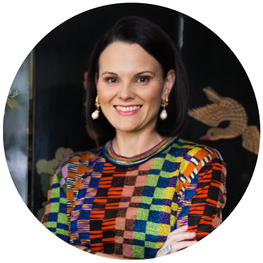
Lisa, Senior interior designer at No Chintz who works with clients on custom lampshade design, shares her insights into what makes a great shade — and why it's worth taking seriously.
How to find the right shade for a lamp base
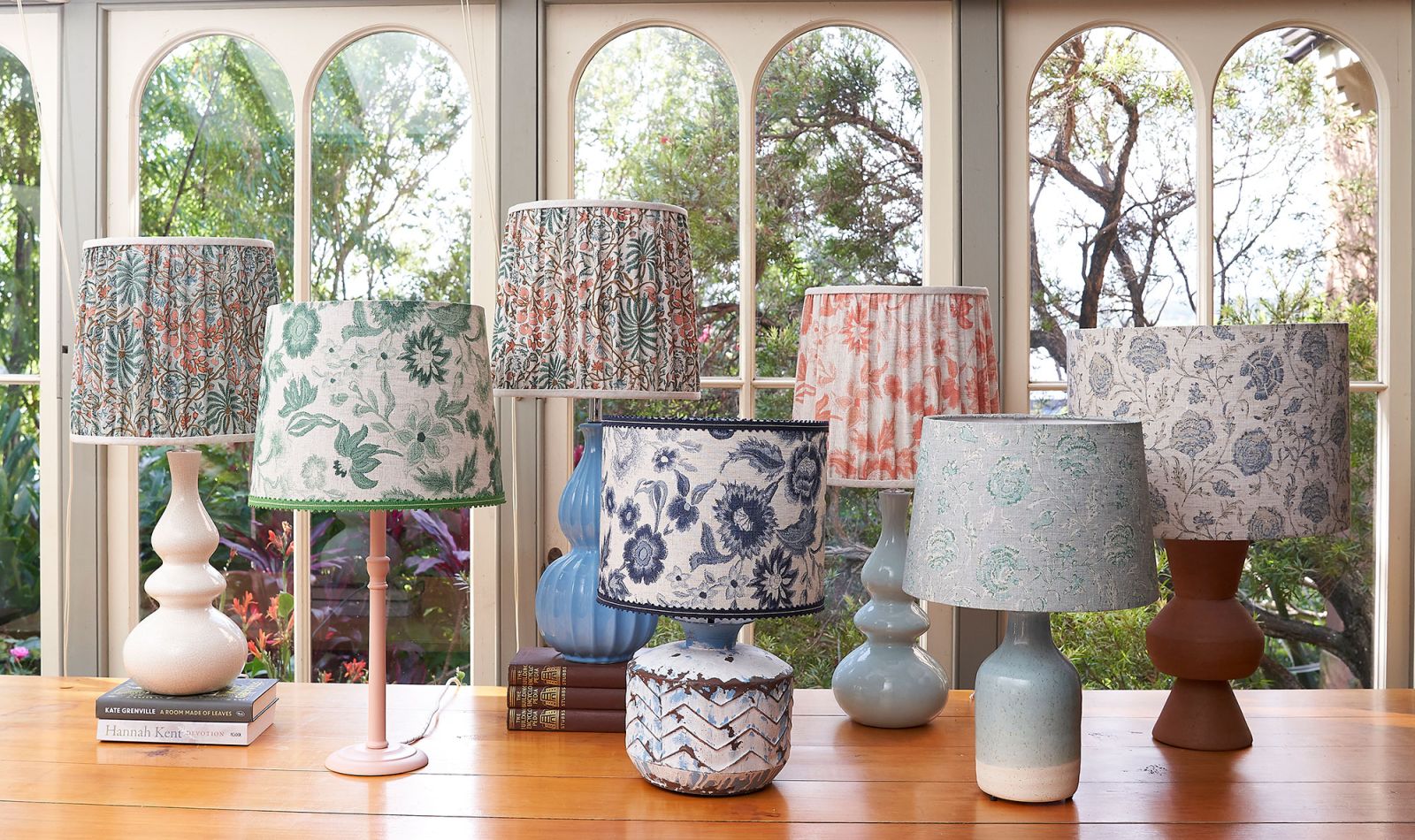
The most common reason people seek out No Chintz’s expertise is surprisingly straightforward: they have a lamp base they love and no idea what to do with it. Often the base has been in the family for years, passed down through generations, and carries a little history with it. The challenge is finding a shade that honours that — complementing the base without competing with it and perhaps bringing it gently into the present.
"We always say to people, if you're looking for a shade for an existing base, bring the base in," Lisa explains. From there, everything else can follow: the right proportions, the best shape, the fabric, the pattern, and crucially, the fitting — the mechanism with which the shade sits on the base. There are two common types, Australian and European, and getting this right matters more than most people realise. Then there's the recess: how far up or down the shade sits on the base, which can be adjusted to hide an unattractive chrome fitting or show off an ornate one.
What fabric works best for lampshades?
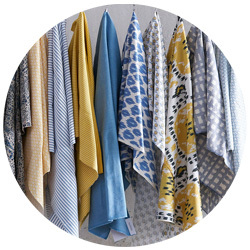
Ask what fabrics work best for lampshades, and you will find there's no single answer — the options are broader than most people expect. Very thick fabrics can be tricky, since finishing the top and bottom of a shade requires rolling the fabric into the frame, and too much bulk makes that difficult. But even that rule has its exceptions: she's seen beautiful shades made from hessian sacks, testament to the skill of a talented maker.
The question of whether fabric needs to allow light through is another common misconception. Most of the light from a lamp comes from the top and bottom of the shade, not through the body of it, and the strength of the globe plays its part too — generally no higher than 60 watts for a table or floor lamp. If light through the body of the shade is important, a transparent styrene lining can be used, though there's a caveat: with a printed fabric and a clear lining, the design can get washed out when the light is on. For that reason, a standard white lining is almost always preferred — it creates a gentle backdrop for the fabric and still allows plenty of light where it counts.
.jpg)
A Lampshade is a Decorative Object
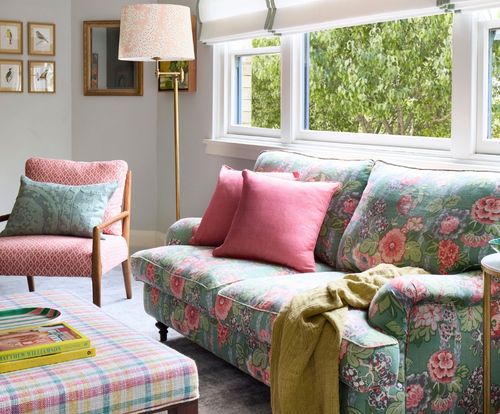
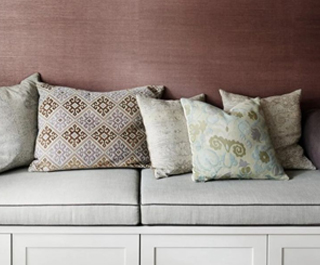
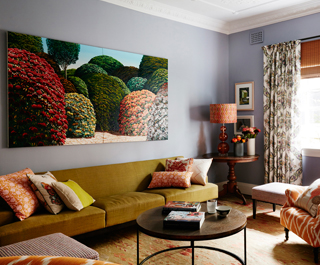
Perhaps the most important shift in thinking is that a lamp and shade should be considered as a decorative element, much like a cushion or a piece of artwork. Even when it's switched off, a shade is a swatch of beautiful fabric sitting in a room, contributing to its character.
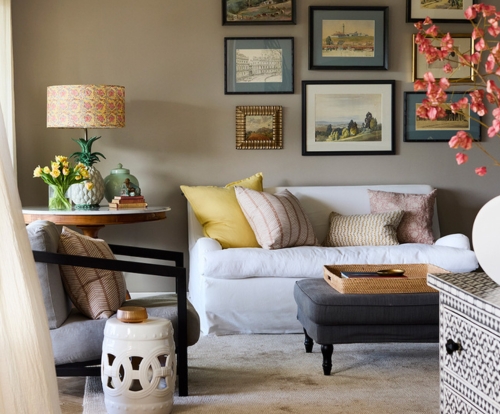
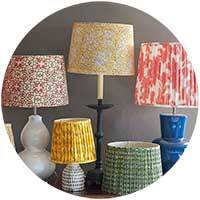
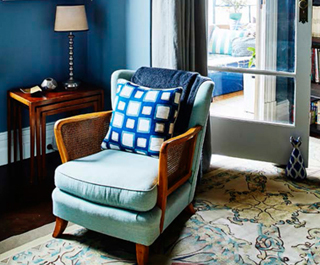
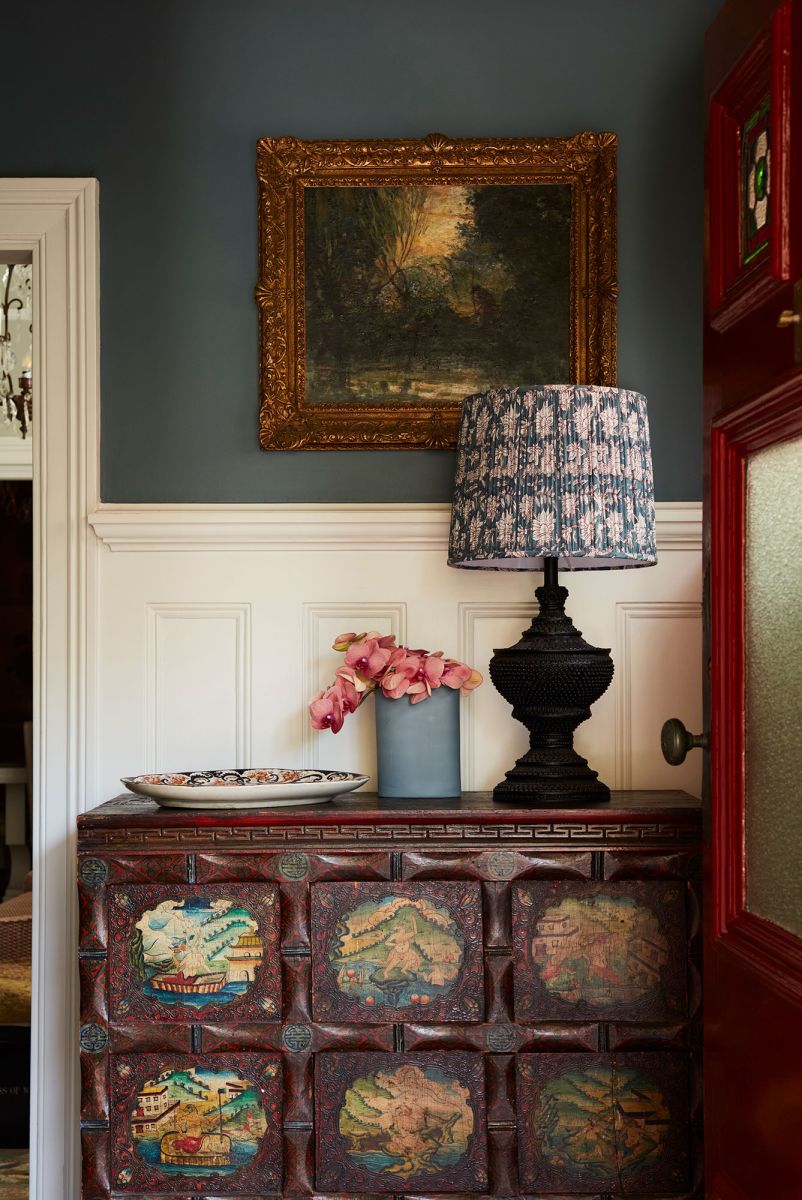
That's why Lisa or any one of the designers at No Chintz always asks clients : what's happening in the rest of the space? What colour are the walls? What's on the sofa? Is there a timber floor, or a particular palette running through the room? A lamp base is almost always placed against a wall, which means the wall colour alone can guide the shade choice significantly. Plain base? Perhaps something more adventurous for the shade. Intricate or painted base? Something quieter, so the two can coexist gracefully.

Lamp Proportions and Placement
When it comes to choosing or designing a lamp from scratch, proportion is everything. For floor lamps — which typically stand well over a metre tall — Lisa finds that people consistently err towards shades that are too small. A floor lamp needs presence, and that means a shade with real width, even if it isn't especially tall. For table lamps, the starting point is always the surface the lamp will sit on: a narrow bedside table calls for a smaller, taller base, with the shade scaled accordingly.
The base material matters too. In a room with timber furniture, a timber floor lamp base feels considered and cohesive. In a more contemporary space, a slim metal base in a brushed or matte finish might be exactly right. The fabric and colour of the shade then follow from everything else in the room — it all builds from the context outward.
.jpg)
Adding a Trim to a Lampshade
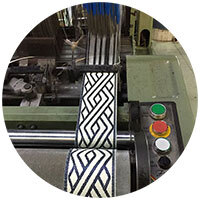
Once the fabric is chosen, there's still the question of finishing. A simple trim along the bottom of a shade — or top and bottom — can add just the right note of interest, especially with a plain fabric. More flamboyant options exist too: tassel fringes, for instance, work beautifully when there are other fringed or trimmed elements elsewhere in the room.
One technical note worth knowing: thick braids don't sit well on shades that taper towards the top, because the shape of the shade means the braid won't lie flat. Drum shades, being cylindrical, don't have this problem and can take a heavier trim without issue. And for anyone wanting to add something a little playful, pompoms are, as Lisa puts it, one of the best ways to bring a smile to a room.
What is the difference between a Bonded vs. a Gathered lampshade?
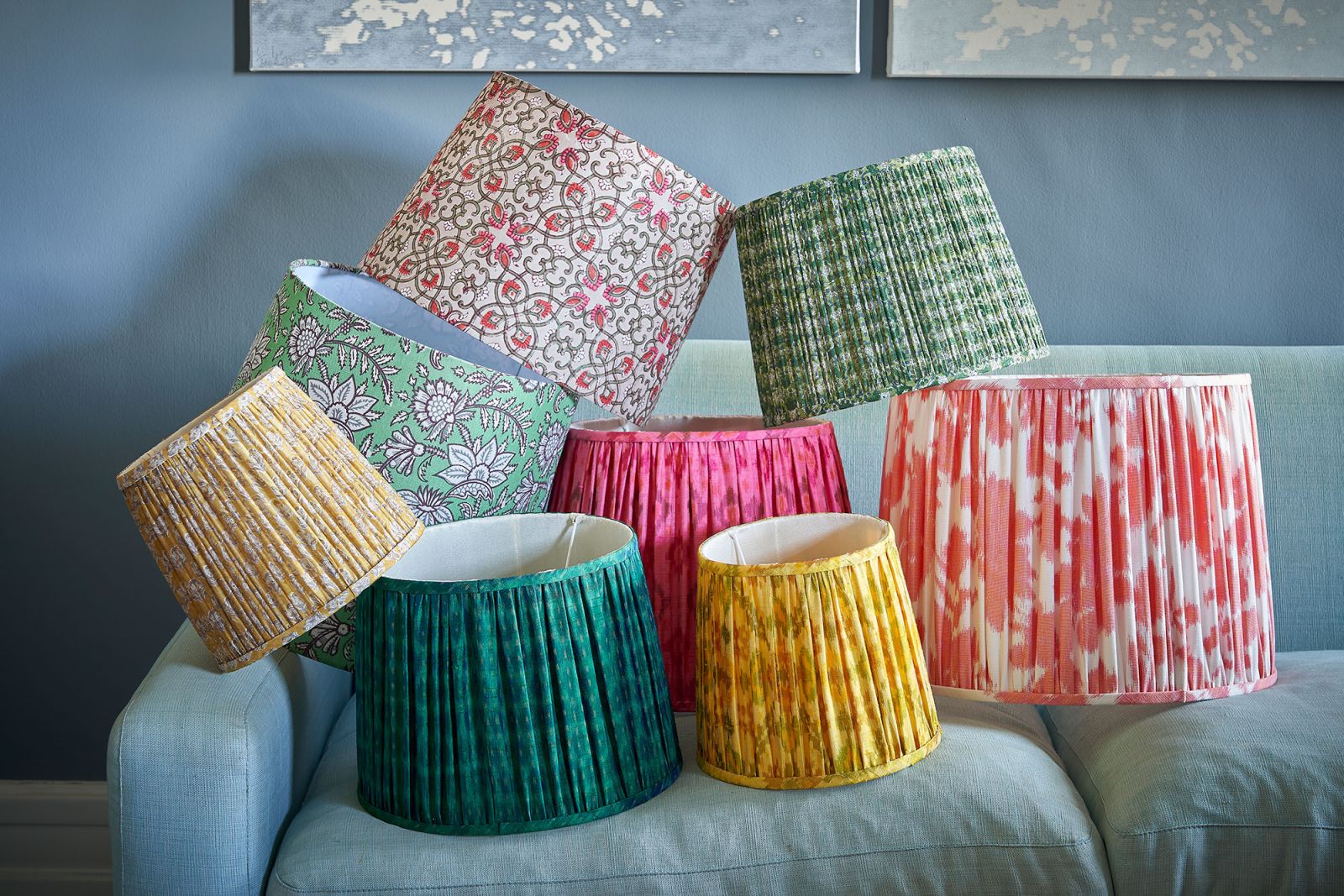
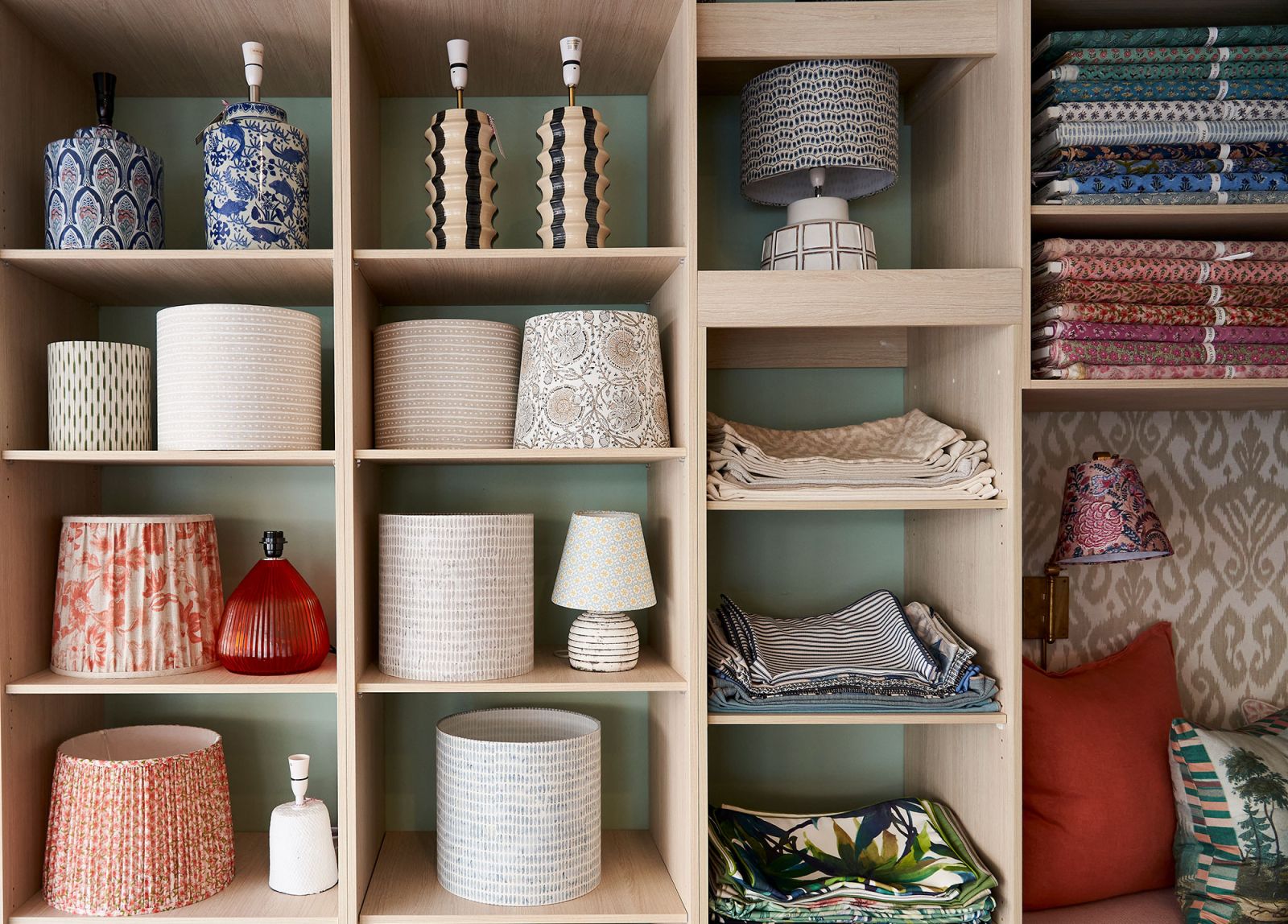
There are two main construction types for custom shades. A bonded shade has the fabric adhered directly to a styrene lining — clean, structured, and suited to most fabrics and styles. A gathered shade, by contrast, has the fabric gathered along the frame in soft folds, lending a more traditional or romantic feel. These tend to be made from finer materials — a delicate cream silk, or the beautiful block-print cotton silks sourced from India that Lisa favours for this style — and because they're more labour-intensive, they typically cost more.
Now Trending: The Pendant Lampshade
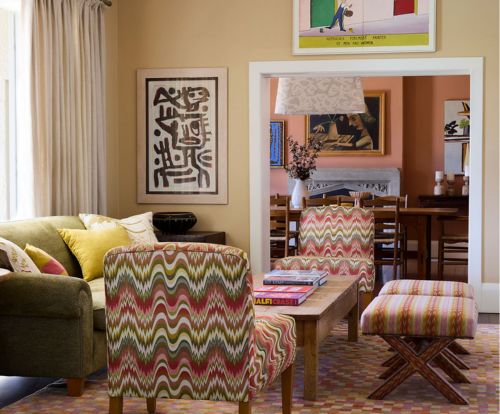
One of the most exciting areas of growth in lampshade design right now is the pendant shade — a custom fabric shade hung from the ceiling in place of a conventional light fitting. It's a look that has been gaining traction in European interiors, and for good reason. A fabric pendant brings pattern and texture into the middle of a room in a way that a glass fitting simply can't, and it can be changed years down the track as tastes evolve. A simple drum shade hung from the ceiling, or something more bespoke entirely — like the extraordinary custom pendant shade made for a client (see the Cremorne project on our blog), a first-of-its-kind creation that required close collaboration between Lisa and the lampshade maker to bring to life — show just how far the form can go.
.jpg)
Why Lamps Still Matter
In an era of recessed downlights and flush fittings, there's a strong case for lamps. Downlights are functional, but they're not particularly atmospheric. A fabric shade — whether on a floor lamp in the corner, a pair of bedside table lamps, or a pendant hanging from the ceiling — introduces softness, warmth, and a human scale to a room that fixed lighting simply can't replicate. It brings light to different levels of the space, creates mood, and contributes something genuinely beautiful even when it's turned off.
Custom Made Lampshades, to Last
The process of having a shade custom made is more straightforward than it might seem. Bring in the base, talk through what's happening in the room, choose a fabric, and the rest follows. Turnaround at No Chintz is typically up to six weeks for the making of the shade, with additional time if specialist fabrics or trims need to be ordered. For those in a hurry, a curated selection of ready-made shades is available in store, and a simple trim can always be added to personalise even an off-the-shelf option.
And for anyone who has been walking past that old lamp base in the corner, unsure what to do with it — this might be the moment to bring it in store and talk to a No Chintz designer about how a new look can lead to a pleasant change of scene.

Tina Gomes Brand is a freelance writer who searches out all things creative from food and architecture to travel, fashion and interiors. Brand writes from a broad experience of interacting with various cultures and collaborating with creative people everywhere.