Should I upholster my old sofa?
Date Posted:1 September 2026
I have moved my parent’s old sofa from house to house. It spent three years in an inner Sydney storage warehouse after it emerged a decade ago from an old shed on my mum’s country property and now, after all those years, it is crunch time.
Upholster it or give it away?
Clearly, I’m struggling with this decision, so I call in the woman who I think knows all there is to know about upholstery: No Chintz’s Chrissie Jeffery.
When is it really worth it I ask her? “If you're reupholstering something, it has to be worth reupholstering,” Chrissie explains. “That means a good hardwood timber frame, properly sprung, or at least able to be fixed.”
Essentially, older, well-constructed furniture – particularly those made in Australia before the rise of mass imports – are the real treasures. A vintage sofa from a reputable brand like Mark Foy’s, with its dovetail joints and high-quality webbing, can be brought back to life and still rival or surpass many modern, mass-produced pieces in both quality and comfort. As luck would have it, my sofa originally did come from Mark Foy’s.
“Recovering something like that is absolutely worth it,” she says. “To replace it today with something of equal quality would cost upwards of $15,000.”
Another piece of key piece of advice? Know the role of your upholsterer.
“Upholsterers are journeymen. They’re tradesmen. They’re not designers,” Chrissie cautions. “If you want to alter a sofa or change the look – don’t expect your upholsterer to guide you.”
Their job is to recover the piece, often in the most straightforward way possible. If you’re seeking to modify proportions, adjust the style, or play with pattern and fabric choices, consult a designer first. They can help you translate your vision into specific instructions
for the upholsterer – and prevent costly miscommunications.
Another common mistake? Covering all your pieces in the same fabric.
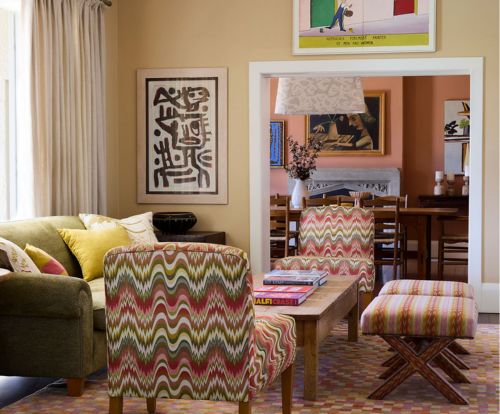
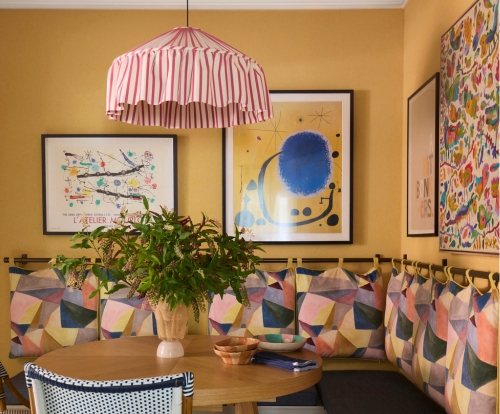
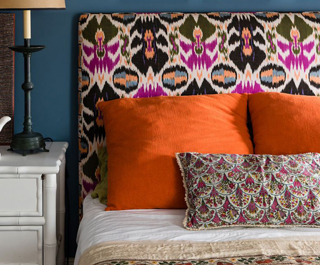
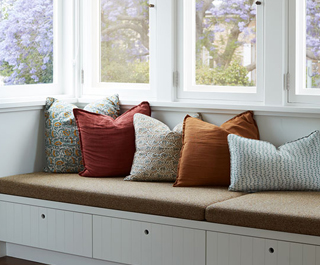
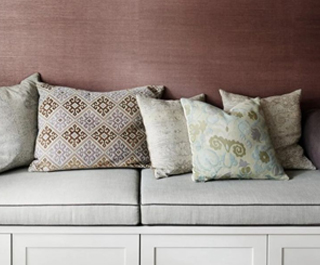
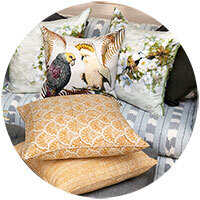
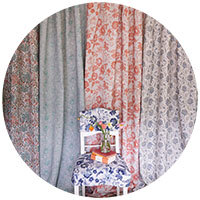
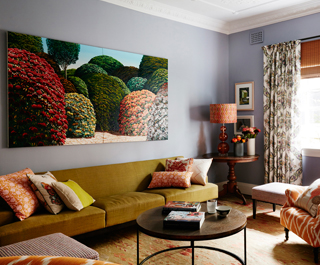
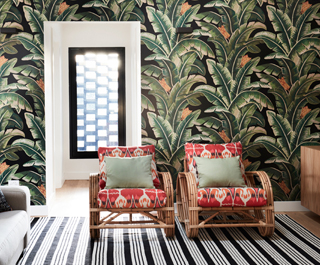
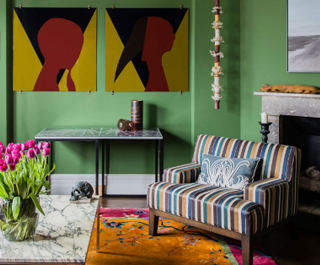
“Every time I send a client to an upholsterer, they come back with the same fabric on every single piece,” Chrissie says. “That’s not how you build a beautiful room.” Texture, pattern and variety are key. Even within a neutral palette, combining fabrics — a woven texture here, a bold print there – adds depth and personality. It also helps hide wear and tear over time, especially in high-traffic areas.
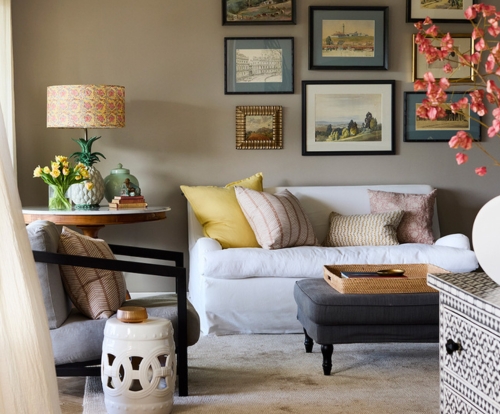
Sometimes, you don’t need to reupholster a piece of furniture from the ground up. If the structure and padding are still in great shape but you dislike the fabric, a custom slipcover can be a great alternative.
“There are a couple of very good people who can do slipcovers really well,” says Chrissie. “It’s worth doing if the sofa is in good nick but you hate the fabric.” Slipcovers also offer flexibility – great for seasonal changes or homes with pets and kids.
But even a well-upholstered piece doesn’t last forever – and nor should it.
“Eight to nine years is a good life for upholstery,” Chrissie says. “After that, you’ll probably want to change it anyway.” While polyester fabrics promise durability, they can be hard to clean and lack the warmth and texture of natural fibres. High-quality cottons and blends might wear out a little sooner, but their charm often increases with age – especially for those who appreciate a bit of patina.
It’s also important to remember you are creating an interior you want to feel at home in, not one that is about scoring the highest fashion points. The best homes, Chrissie believes, aren’t the most on-trend – they’re the most lived-in.
“Our clients aren’t following fashion,” she says. “They’re working with what they’ve got – pulling it all together in a way that’s uniquely theirs.”
And in a world of constant turnover and fast design, that’s a philosophy worth upholstering into our homes.
“When a client comes home, they should walk in and say, ‘I’m so glad I’m home,’” Chrissie says. “That’s the goal. Not fashionable. Just comfortable, liveable, and a delight to come home to.”
In the world of interiors, upholstery often lingers as an afterthought – that sagging armchair in the studio or, like mine, the inherited sofa in the shed. But, after this chat with Chrissie, I’ve decided to take the plunge. My mum’s Mark Foy’s sofa is about to take on a new lease of life.
Words by Victoria Carey